
AWS VPN: Secure Connectivity for Your Cloud Infrastructure
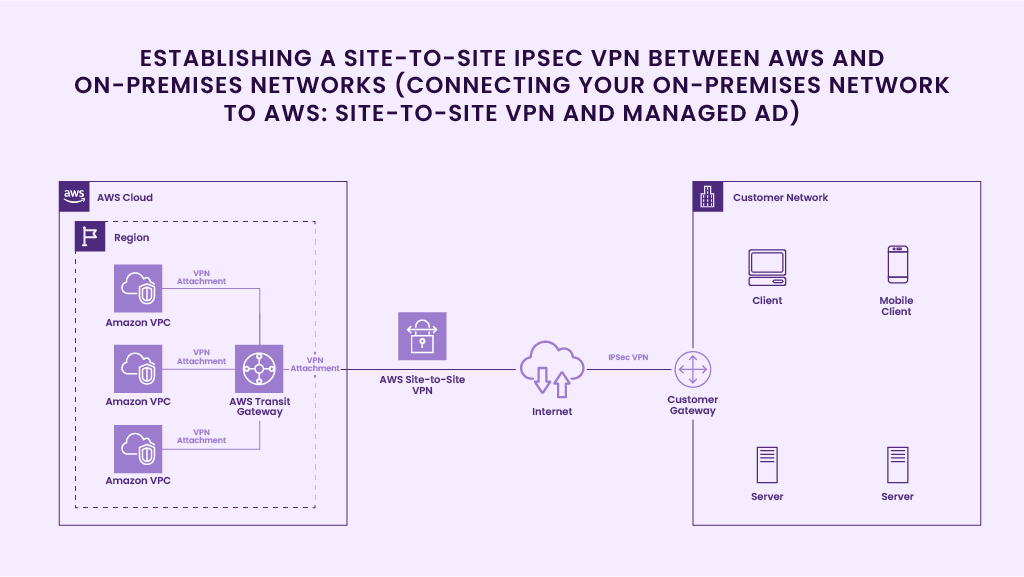
Amazon Web Services (AWS) Virtual Private Network (VPN) is a service that allows you to establish secure and encrypted connections between your on-premises network and your AWS cloud infrastructure. This enables you to extend your data center into the cloud while ensuring privacy, security, and compliance.
With AWS VPN, you can create a virtual private network connection using industry-standard protocols such as IPsec (Internet Protocol Security) to securely transmit data between your network and AWS resources. This helps protect sensitive information from unauthorized access and ensures the integrity of your communications.
Key Benefits of AWS VPN:
- Enhanced Security: Encrypts data transmitted over the internet, safeguarding it from potential threats.
- Scalability: Easily scale your VPN connections based on your business needs without compromising performance.
- Cost-Effective: Pay only for the resources you use, making it a cost-effective solution for secure connectivity.
- Compliance: Helps you meet regulatory requirements by ensuring data privacy and security standards are maintained.
Types of AWS VPN Connections:
AWS offers two types of VPN connections:
- Site-to-Site VPN: Establishes secure connections between your on-premises network and AWS using IPsec VPN tunnels.
- Client VPN: Provides secure remote access to your AWS resources for individual users or devices over SSL/TLS protocol.
AWS VPN is a valuable tool for organizations looking to securely connect their on-premises infrastructure with their cloud environment. By leveraging AWS’s robust infrastructure and encryption capabilities, you can ensure that your data remains protected while benefiting from the flexibility and scalability of cloud computing.
Top 8 Frequently Asked Questions About AWS VPN: A Comprehensive Guide
- What is AWS VPN?
- How does AWS VPN work?
- What are the benefits of using AWS VPN?
- What types of VPN connections does AWS offer?
- How do I set up a Site-to-Site VPN on AWS?
- Can I use AWS VPN for secure remote access (Client VPN)?
- Is AWS VPN cost-effective for small businesses?
- What security measures are in place to protect data transmitted over AWS VPN?
What is AWS VPN?
AWS VPN, short for Amazon Web Services Virtual Private Network, is a service that enables secure and encrypted connections between your on-premises network and your AWS cloud infrastructure. It allows you to extend your data center into the cloud while maintaining privacy, security, and compliance. By utilizing industry-standard protocols like IPsec (Internet Protocol Security), AWS VPN ensures the safe transmission of data between your network and AWS resources, protecting sensitive information from unauthorized access and maintaining the integrity of your communications.
How does AWS VPN work?
AWS VPN works by establishing secure and encrypted connections between your on-premises network and your AWS cloud infrastructure. This is achieved through the use of industry-standard protocols like IPsec (Internet Protocol Security) to create virtual private network connections. These connections ensure that data transmitted between your network and AWS resources is protected from unauthorized access and potential threats. By leveraging AWS VPN, you can extend your data center into the cloud while maintaining privacy, security, and compliance standards. This seamless integration allows for secure communication and data transfer between your on-premises environment and the AWS cloud, enabling you to securely access and manage your resources with peace of mind.
What are the benefits of using AWS VPN?
One of the frequently asked questions about AWS VPN is, “What are the benefits of using AWS VPN?” Using AWS VPN offers several key advantages for businesses looking to establish secure connectivity between their on-premises network and their cloud infrastructure. Some of the main benefits include enhanced security through encryption of data transmission, scalability to adjust VPN connections based on business needs, cost-effectiveness by paying only for utilized resources, and compliance with regulatory standards to maintain data privacy and security. By leveraging AWS VPN, organizations can ensure a secure and reliable connection while benefiting from the flexibility and efficiency of cloud computing.
What types of VPN connections does AWS offer?
Amazon Web Services (AWS) offers two main types of VPN connections: Site-to-Site VPN and Client VPN. The Site-to-Site VPN allows you to establish secure connections between your on-premises network and AWS using IPsec VPN tunnels, enabling seamless communication between your local infrastructure and cloud resources. On the other hand, the Client VPN service provides secure remote access to your AWS resources for individual users or devices over the SSL/TLS protocol, ensuring that authorized users can securely connect to your cloud environment from anywhere. These two types of VPN connections offered by AWS cater to different use cases and provide flexibility in securely connecting your networks to the cloud.
How do I set up a Site-to-Site VPN on AWS?
Setting up a Site-to-Site VPN on AWS involves several steps to establish a secure connection between your on-premises network and your AWS cloud infrastructure. First, you need to create a Virtual Private Gateway (VGW) in your VPC and attach it to your VPC. Next, configure a Customer Gateway (CGW) representing your on-premises VPN device with the necessary settings such as IP address and pre-shared key. Then, create a VPN connection between the VGW and CGW, specifying the encryption protocols and routing options. Finally, update the route tables in your VPC to direct traffic destined for your on-premises network through the VPN connection. By following these steps and ensuring proper configuration on both ends, you can successfully set up a Site-to-Site VPN on AWS for secure communication between your networks.
Can I use AWS VPN for secure remote access (Client VPN)?
Yes, you can use AWS VPN for secure remote access through the Client VPN feature. AWS offers Client VPN as a service that enables individual users or devices to securely connect to AWS resources over the SSL/TLS protocol. This allows remote employees, partners, or customers to access your AWS infrastructure securely from any location, ensuring data privacy and integrity. By leveraging AWS VPN for secure remote access, organizations can provide a seamless and protected connection for their users while maintaining control and compliance with security policies.
Is AWS VPN cost-effective for small businesses?
When evaluating the cost-effectiveness of AWS VPN for small businesses, it is important to consider the benefits it offers in relation to its pricing structure. AWS VPN provides a scalable and secure solution for establishing encrypted connections between on-premises networks and cloud resources, which can be particularly valuable for small businesses looking to expand their infrastructure without compromising security. While there are costs associated with utilizing AWS VPN, such as data transfer fees and hourly usage rates, the pay-as-you-go model allows small businesses to only pay for the resources they use, making it a cost-effective option compared to traditional networking solutions. Additionally, the scalability of AWS VPN enables small businesses to adjust their usage based on their needs, further enhancing its affordability and flexibility for growing organizations.
What security measures are in place to protect data transmitted over AWS VPN?
When it comes to protecting data transmitted over AWS VPN, Amazon Web Services (AWS) implements robust security measures to ensure the confidentiality and integrity of the information. AWS VPN utilizes industry-standard encryption protocols such as IPsec to encrypt data in transit, making it unreadable to unauthorized parties. Additionally, AWS employs network firewalls, access controls, and monitoring tools to safeguard against potential threats and intrusions. With these comprehensive security measures in place, AWS VPN provides a secure and reliable means of transmitting data between on-premises networks and cloud resources while maintaining the highest standards of data protection.
Tags: amazon web services, aws vpn, cloud infrastructure, compliance, data center, data transmission, encrypted connections, industry-standard protocols, ipsec, on-premises network, privacy, resources, secure connectivity, security, sensitive information, virtual private network